Showing posts with label Literature. Show all posts

Friday, January 30, 2015

Review of Margaret Mitchell's Gone with the Wind

Gone with the WindGone with the Wind by Margaret Mitchell
My rating: 2 of 5 stars

So, lash me with a wet noodle, but I found this novel kinda awful.

I don't think I've ever read a novel where I disliked every single character, found them all silly caricatures, and framed in a context of naive and displaced nostalgia for a Southern life that was actually quite disturbing and inhumane in spite of its pretenses to gentility and charm.

And, yes, I mean this about every character, including the surreally angelic Melly, the brat Bonnie Blue, and the disturbingly minstrelized Mammy.

I'm a born and bred Southerner myself (if you really call New Orleans southern); and I have to say that if this is the quintessential story of the true South, I say thank God the Yankees won and that this South is gone, for it's a contemptible society, not a quaint one.

But I don't think this picture is really anything like the South - even the South of the 1860s. It's a romance in all respects - a romance of what fantasists might pine for in terms of an identity, but even this romanticized fantasy leaves much to be desired.

I gave it a 2-star ranking instead of a 1-star ranking because I've read worse writing stylistically and structurally; but it's nowhere near what I would consider Pulitzer worthy talent.


View all my reviews

Review of Elena Ferrante's My Brilliant Friend

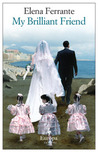
My Brilliant FriendMy Brilliant Friend by Elena Ferrante
My rating: 4 of 5 stars

Well, I don't know that I'd call this a modern masterpiece, but it is a nice read. It's one of those works of fiction that are really more like semi-autobiographical creative non-fiction. It sounds a lot like I would expect Elena Ferrante's childhood and adolescence to have been. It certainly reads that way.

But there is a warmth and ease of story-telling here that I really enjoyed and appreciated. You don't have to work too hard to extract meaning from the story and to be drawn into the storyline.

One of my criticisms, though, is the utter lionizing of the narrator's "perfect" friend, Lila. No one I know is as one/dimensionally smart and accomplished as Lila, the narrator's exceptional friend. Makes me think that the narrator is, herself, in a state of delusion about the special qualities of Lila.  But if this is simply a literary convention, it's quite effective.

A book well worth reading for our Book Club.  And one that propels the reader to want to tackle the next three books in the series.


View all my reviews

Book Review of Julie Andrews Edwards' The Last of the Really Great Whangdoodles

The Last of the Really Great WhangdoodlesThe Last of the Really Great Whangdoodles by Julie Andrews Edwards
My rating: 3 of 5 stars

It's not terrible, as far as children's literature goes. I imagine there's worse. But it's only average. I give it some props for creativity and imagination; but it's really just a weak replica of the combined Wizard of Oz, Alice in Wonderland, A Wrinkle in Time, and the Narnia Chronicles. Same basic character types and plot structures, only not nearly as good. I probably wouldn't recommend this in favor of other better children's literature.  Anyway, I read this because it was a Christmas gift from my oldest daughter (who is 16 years old now), and she has memories of our reading this together when she was a little girl. But I'm certain that I never read this before and that she either read this for school or in some other context and is confusing her memories. Regardless, she's promised to read this book, too, as part of our own little book club, so we will end up sharing this reading experience after all. And that's definitely worth the read, irrespective of how good this book is!


View all my reviews

Saturday, January 24, 2015

Review of Edith Wharton's The Age of Innocence

The Age of InnocenceThe Age of Innocence by Edith Wharton
My rating: 3 of 5 stars

This niche book is just o.k.  I found it rather predictable.  From the beginning, I thought it an updated and Americanized imitation of Jane Austen and what I like to call the "society" novels.  I haven't ready any Henry James, and my extremely well-read wife tells me that this Wharton novel is more in the Henry James tradition, than in the late 18th/early 19th century British novel tradition.  That may very well be, but still … it's all of a piece with the theme of stifling upper society, semi-aristocratic conventions that stifle passion and love and oppress women.  It's an even greater indictment of this elite environment that the novels seeking to capture its dimensions are basically all the same.  You read one of these stories and you know all you need to know about it.  Any others are just minor variations of the theme.  How dreadfully boring to live in such an environment.  At least Jane Austen, writing some 100 years before, has a bit more humanity in the pages and characters of her stories, as well as moments of surprise that, while not altogether unexpected, are at least simply and refreshingly presented.

When it comes to engaging the richness of the dilemma of social conventions on the lives of women, nothing captures the tragedy of this better than Tolstoy's "Anna Karenina."  And while Wharton's novel was mainly about Newland Archer, it was also just as much about the social and financial oppression of both May Welland and Ellen Olenska.  And Wharton's Ellen Olenska is a pale comparison to Tolstoy's Anna Karenina.  Now don't get me wrong: I very much liked the Ellen Olenska as a character crafted by Wharton; but my empathy for her and the injustices she suffered didn't nearly touch the depths of emotion in me as did my profound sense of empathy for the character of Anna Karenina.  But, I digress …

This Wharton novel, celebrated (mostly) as a triumph at the moment of its publication, won the 1921 Pulitzer Prize for fiction.  Did it deserve this award.  Sure.  It's not a bad novel.  And, to give Wharton some credit, she has a wicked sense of humor and cleverness that peeps through on occasion, especially in the beginning chapters of the novel.  And she is, undoubtedly, very erudite.  So, yes, on these grounds perhaps the novel is Pulitzer-worthy; but I just found the story itself to be weak soup.  In fact, I would say that Booth Tarkington's "Magnificent Ambersons" or even Margaret Ayer Barnes's "Years of Grace" (two other Pulitzer winners that deal with wealth, status, and society, to much better capture the complexity and uniqueness of an "American" version of these themes. And as for a picture of New York society, I'd say even Ernest Poole's "His Family" captures the United States's quintessential commercial city in a much more interesting and complete light.

Anyway … Yes, I liked the novel well-enough.  Yes, I'd rank it Pulitzer-worthy.  But, no, it's not the best of this genre, nor is it the best of the Pulizter winners.  Folks should read it because it's achieved status as a classic of American literature (and does represent one kind of writing); but don't just rest on Wharton for the great literature of her day.  Dig into the literary weeds a bit, and read some of her more obscure contemporaries (and perhaps even her not-so-obscure contemporaries), and I think you'll be surprised at how mediocre this work stands relatively and how lacking it is in capturing the best of what American literature of the day had to offer.


View all my reviews

Saturday, January 17, 2015

Review of Ciszek's "He Leadeth Me"

He Leadeth MeHe Leadeth Me by Walter J. Ciszek
My rating: 3 of 5 stars

This book had its inspirational moments, and is well worth a read.  But as a narrative, story-telling experience, it was average and suffered some from lack of context, detail, and creativity.  There was also a lot of repetition.  I had no issues with the theology. It was simple, but powerful and thought-provoking.  But as read, it was more tedious than gripping, which is a shame, because there was so much potential for its being a gripping read.  I mean, how often can you get a first hand account of spending time in Soviet prisons and labor camps during some of the worst moments of the Stalinist regime?  And it just did not meet expectations in this regard.  I also found the structure a bit predictable.  Each chapter (titled by a particular concept) started with a short personal anecdote of an experience the author had, and then ended with a didactic bit of preaching about the concept.  The anecdotes were better than the didactic preaching.  But often times the preaching fell flat because there were so many contextual gaps that raised more questions about the how and why he arrived at the revelations of the concept he was preaching.  All that said, I did come away from the book with a more reflective understanding of the Catholic Christian faith and my experience as one of its adherents and practitioners.  Let me end this brief review, though, with one thing that really bothers me about this kind of book.  (Not just this particular book per se, but all those -- including this one -- that fall into this genre.)  These books give the impression that there is something special in an understanding of faith because of his particular experience of suffering and oppression.  That such kinds of experiences provide an insight to faith that one can only get from being so oppressed and abused.  The rest of us have been taught to view such accounts with deference and awe.  But I think there are people who live what we might call "normal" lives in relatively free and open political systems who can arrive at the same revelations from their own particular experiences.  One does not need to be imprisoned by the communists, tortured, starved, harassed, and abused, to have special insight or connection to God.


View all my reviews

Review of Sinclair's "Dragon's Teeth"

Dragon's Teeth II (World's End)Dragon's Teeth II by Upton Sinclair
My rating: 4 of 5 stars

I really enjoyed this book (the entire 631 pages of Parts I & II). It is slow-going at first (Part I), but it really picks up in Part II (this book), and is well-worth sticking with it until it does. And once it does, WOW! You just can't put it down. What I think is masterful about this book is that Sinclair manages to describe the horrors of the Nazi rise to, and brutal exercise of, power. The evil and lunacy of men like Goebbels, Goring, Hitler, etc., is not only presented in an unvarnished way, but also with a real sense of disgust and contempt - yet also, amazingly, still finding a way to avoid caricaturizing this brutality and even generating some nuanced picture of a below-the-surface humanity in Nazi Germany in the midst of all this madness through characters like Hugo Behr and Kurt Meissner. Irma was a disappointment in the end, but I think she represented in Sinclair's estimation the reprehensible attitude among many Americans of the day of utter disinterest, or even disbelief, of what was happening in Hitler's Germany in the early years of the Third Reich. Amazing that Sinclair wrote this in 1941/42 and was able to publish this in real time as such a complete indictment of the world's failure to address the atrocities they were becoming aware of. Well deserving of the Pulitzer, in my opinion.


View all my reviews

Saturday, January 10, 2015

GK Chesterton's Orthodoxy - A brief review

OrthodoxyOrthodoxy by G.K. Chesterton
My rating: 3 of 5 stars

Chesterton is a witty thinker with some interesting and provocative ideas.  When you first start this book, the freshness of his approach is striking and impressive.  But … it gets old, fast.  His excessive use of paradoxical metaphorical writing is clever the first few times you encounter it; but it wears on you the next 5 thousand times you encounter it.  I mean, really, it seems as if every other sentence is some kind of cutesy parallel inversion of some statement or claim.

His turns of phrase and his witticisms are much too clever by half, meaning his overdoing it in this regard diminishes his arguments after a while.

But enough on the overbearing style of his writing, what about the content?  And here I give Chesterton his props.  His defense of orthodoxy is creative and persuasive … mostly.  I think he makes some good arguments, but I think he is his own worst enemy in the sense that by pounding his arguments so incessantly, he inevitably falls into the trap of making the reader think he is slicing and dicing an argument in so many different ways because there is some weakness inherent to it.  And, indeed, I think there are some weaknesses which cause an honest thinker to question the legitimacy of his claims.

For one, the debater's trick he uses to mischaracterize or unfairly pigeon-hole the arguments of his rivals diminishes his own arguments.  He has a tendency to twist his opponents' arguments to mean things that he can argue against, but which are really not the meanings put forward by his opponents at all.  In essence, he is quite skillful at taking incomplete bits and snippets of an oppositional argument and then using them to set up a more comprehensive intellectual straw man that he then beats down.  In a sense, this debating style is quite effective rhetorically, but it rings hollow and disingenuous in terms of its substance.

I could go into detail and give many examples of what I mean by the above critique, but I just don't feel like it's worth it.  Just read the work and you'll get a good sense of what I mean.

And the shame of it is that his core idea doesn't really need all that rhetorical bamboozling and cleverness.  For those who want to find a fascinating debater's defense (and a novel one at that) of Christian orthodoxy, you'll enjoy this read.  But for those who are looking for an intellectually honest defense of orthodoxy, you might find this read a bit problematic and troubling.


View all my reviews

Sunday, August 10, 2014

Summer Reading

Long time since last I posted anything.  I guess it's about time I wrote up something, and what could be easier than giving a run down on what I've been reading lately (or at least since I last gave such an update).

I've actually read quite a bit.  One of the benefits from being in multiple book clubs and having an academic career.  But I'm only going to focus on what I read for fun, only throwing in a few of the books I've tackled for school.  If anyone wants to keep up with my reading life in real time, just hunt me down on Goodreads, as I use Goodreads regularly to track my reading progress.

Also, I should say that I've committed myself to reading all the Pulitzer Prize winners for fiction, so that's also given me a goal that has been directing my reading.

The last time I provided an update was nearly a year ago, in September of 2013, so I'll use that date as my starting point.

I'll link each book to its site on Goodreads, and you can find any reviews I might have posted about the book there.

Here goes ...

Warren Moore's Broken Glass Waltzes - "4" star ranking (out of five possible stars) - (This was a crime noir novel that I read on my Nook.  I'm not much for this kind of literature, but it was a book published by a blogger whose writing I have come to like, so I figure I'd give it a go.)

James Martin, SJ's My Life with the Saints - "4" star ranking - (From my spiritual readings book club.  Wonderful, engaging writing.  I really enjoyed it.)

Juan Gabriel Vazquez's The Sound of Things Falling - "4" star ranking - (From another book club.  A great addition to the Latin American literature collection.)

C. Alan Ames's Through the Eyes of Jesus: A Trilogy - "2" star ranking - (Bordering on the lowest "1" star ranking.  Another book for my spiritual readings book club; but one which I didn't pick.  I only read the first of the Trilogy and that's all I think I ever will read of it.  I found it to be less than inspiring and very poorly written.  Out of charity, I won't say anything else about it.)

Jesmyn Ward's Salvage the Bones - "4" star ranking - (From the couples book club.  A hurricane Katrina novel.  Very worthwhile read.  Jesmyn Ward will now be teaching at Tulane University, which is very exciting.)

Miguel A. De La Torre's Reading the Bible from the Margins - "4" star ranking - (My pick for the spiritual readings book club.  Vociferously despised by my more conservative, orthodox brothers in the club.  If you want a radical re-reading of the bible as a testament to its social and political emphasis on solidarity with the poor, this book is for you.  It's sometimes a bit in-your-face, but its liberation theology message is one that really resonates with me.)

Roberto BolaƱo's The Savage Detectives - "4" star ranking - (A selection for my men's book club.  Loved it. Unique style of writing.)

Georges Bernanos's The Diary of a Country Priest - (One I have started on and off since college and finally just buckled down and read it.)

[NOTE: I'll have to come back and flesh out the details and links for the following books appearing below that I've read, but I'll just simply list them for now.]

Michael Cunningham's The Hours - (Pulitzer winner for 1999)

Booth Tarkington's The Magnificent Ambersons - (Pulitzer winner for 1919 and my selection for my men's book club.)

Elizabeth Bowen's The Death of the Heart - (Couples book club pick.)

Lewis Carroll's Alice's Adventures in Wonderland and Through the Looking Glass - (My book club with my youngest daughter.)

Homer's The Odyssey (My book club with my oldest daughter,)

Ernest Poole's His Family - (First Pulitzer winner for 1918.)

Janet M. Tavakoli's Archangels: Rise of the Jesuits - (Spiritual book club selection.  Not mine.  Pulpy trash fiction.)

Robert E. Barron's And Now I See...: A Theology of Transformation - (Spiritual book club selection.  Very sophisticated theology and philosophy, but very good.)

Jeffrey Eugenides's Middlesex - (Pulitzer winner for 2003.  Excellent book.)

Eudora Welty's The Optimist's Daughter - (Pulitzer winner for 1973.)

Robert Graves's I, Claudius - (Couples book club choice.)

Jhumpa Lahiri's Interpreter of Maladies - (Pulitzer winner for 2000)

Nathaniel Hawthorne's The Scarlett Letter - (My book club with my oldest daughter.)

Thornton Wilder's The Bridge of San Luis Rey - (Pulitzer winner for 1928.)

Jack London's The Call of the Wild - (My book club with my youngest daughter.)

William Kennedy's Ironweed - (Pulitzer winner for 1984.)

John Steinbeck's The Grapes of Wrath - "4" star ranking - (From the Pulitzer Prize winner collection and also  the quintessential American novel classic.  Definitely a worthwhile read.  Odd that I had never read it until now.)

Currently reading and almost finished with:

Thomas Pynchon's V - (Men's book club selection.)

Margaret Ayer Barnes's Years of Grace - (Pulitzer winner for 1931)

Friday, September 13, 2013

Back on the Blog

Well, my gosh, it's been some 3+ months since I put anything up here.  My last post dates in May of this year, and it's now September.

I think it's quite obvious that I've lost a bit of the taste for blogging.  Well, not just "a bit" but perhaps the most of it.

And I can't really put my finger on the reason why.  Maybe I've just wearied in general of the ideological and political fight that I've always thought as the the blog's purpose.   I do notice that I've also been much less engaged publicly in this fight even on other social media sites.

That doesn't mean that I've sworn off politics or that my views are in flux.  They're most definitely not.  I'm still as fierce a liberal as I always was.  And I still don't shy away from my convictions.  I just don't seem to have the desire to project them as publicly as I have done in the past.

In any case, what drew me back to the blog was more the idea of using it as a creative writing platform than as a tool of political/ideological propagandizing.

Maybe I should start with a brief update of my life since May.  I finished out the academic year at Tulane where I teach.  I prepared for and conducted a six-week summer study abroad program in Costa Rica.  And I returned to New Orleans to work on the slow and tedious job of painting the exterior of my house myself and to prepare for the start of the new academic year.  I also caught up a lot on my reading.  I've become a fan of the "Goodreads" application and program that allows me to chart my reading progress, so if you are really interested in following my reading habits in more detail, you can always check out my Goodreads profile, where you can even find my reviews on many of the books I've read recently.  For now, though, I'll just try to list the books that I've managed to get through over the past year.  (It also helps that I participate in 4 book clubs, which keeps me plugging along.)  Here is my list:

Ray Bradbury's The Illustrated Man (which is a re-read, and which I'm doing in a bookclub that involves me and my eldest daughter, who picked this book, and which she is still -- supposedly -- working on.)

Geraldine Brooks's March (which is part of my own literary crusade to work my way through Pulitzer Prize winners for fiction)

Earl Lovelace's While Gods Are Falling (which I read because one of the Ph.D. students in my department is doing his dissertation on Lovelace and so, having witnessed this student's enthusiasm for this Trinidadian author, I was drawn to give Lovelace a go)

Leonardo Boff's The Prayer of St. Francis: A Message of Peace for the World Today (which is the first book in a new "spiritual readings" book club that I organized with my two younger brothers.  I picked Boff's book because of my enthusiasm for the new Pope -- the first Jesuit Pontiff -- and his fondness for Boff on the one hand, and his choice of St. Francis as his papal namesake on the other hand.)

Alejo Carpentier The Kingdom of This World (as part of my participation in a longstanding book club that involves my wife and another couple)

Donald Cozzens's Notes from the Underground: The Spiritual Journey of a Secular Priest (which came recommended to me by my Maryknoll affiliates group, and which resonates with my own sense of place within the Catholic community)

Michelle Alexander's The New Jim Crow (which was Tulane's freshman book selection and for which I had to moderate a discussion in a Freshmen intro-to-college kind of course -- it's a fascinating and provocative explication on the racial dimensions of our current age of mass incarceration for drug crimes)

Candice Millard's Destiny of the Republic: A Tale of Madness, Medicine, and the Murder of a President (for one of my other regular men's book clubs) -- it's about the murder of James Garfield and his life and times.

Phillip Roth's American Pastoral (another selection from my Pulitzer Prize winners for fiction, and which was my selection for the book club that involves my wife and another couple following the Carpentier novel)

Ronald J. Drez's Gallant Fighting Sons: The Jesuits, Louisiana, and Their School in New Orleans (which is a history of my high school and which, unfortunately, was a rather dreadful rendition that made my high school seem important only for its athletic achievements)

Richard Russo's Straight Man (which was just a random selection from my library that I had wanted to read for a long time and finally got around to doing)

Willa Cather's My Antonia (which was another random selection from my library that I had been intending to read for a while and finally pushed myself to read -- and which I liked a lot, by the way)

Victor Hugo's The Hunchback of Notre Dame (which was my selection for the book club that involves my eldest daughter, but which she never got around to reading.)

Lewis Carroll's Alice's Adventures in Wonderland and Through the Looking Glass (which is the first choice in the book club that I established with my youngest daughter -- actually, I'm still reading Through the Looking Glass, but I did finish Alice's Adventures in Wonderland)

Anthony Powell's A Dance to the Music of Time: First Movement (another selection for the men's book club -- this one was my choice)

Those are the books I've actually finished.  I currently am actively reading the following:

Gregory M. Colon Semenza's Graduate Study for the Twenty-First Century: How to Build an Academic Career in the Humanities (school related)

James J. Martin, SJ's My Life with the Saints (the second choice for the "spiritual" book club I participate in with my two younger brothers)

Warren Moore's Broken Glass Waltzes (a book written by a blogger/academic that I came to know by pure chance)

Roberto Bolano's The Savage Detectives (the latest selection for my men's book club)

Juan Gabriel Vazquez's The Sound of Things Falling (the latest selection for the couple's book club)

Michael Cunningham's The Hours (my Pulitzer Prize winner list)

*******

I also plan to be writing more creatively -- both poetry as well as academic research.  And to the extent that I can, I hope to use this blog as a mechanism to spur my creative writing output.  In fact, in my next blog post, which I'll be putting up immediately after I post this, I'm going to upload a poem I wrote recently on the occasion of my youngest daughter's 11th birthday.  I'd welcome and appreciate any critical feedback or commentary on any of my creative writing output, so please don't hesitate to post some comments.  That's about it for now.  Peace.

Monday, November 19, 2012

What I've Been Reading

Since I last wrote an entry on the books I read (which was back in February of 2012), I've since racked up pretty solid list of reading accomplishments.  Here's the list, which I'll just mention now and perhaps I'll write up some reviews of the books down the road.  But if you've read any of these books, please feel free to leave a comment on what you thought on any of them and I'd be happy to engage in a comment exchange with you:

William Faulkner's The Sound and the Fury (a re-read for me): Grade A+. [All I need to say is that Faulkner is a genius.]

James Agee's A Death in the Family: Grade A [One of the best depictions of dealing with grief in reaction to an unexpected and sudden death that I've ever read.  Also a Pulitzer winner.]

Elaine Dundy's The Dud Avocado: Grade B.  [I picked this to read because the title intrigued me.  And it's a fun read, with some clever writing moments, but nothing that truly stands out as exceptional.]

Dan Baum's Nine Lives: Death and Life in New Orleans: Grade B-. [Most folks find this work interesting and well-written; but I weary of the essentializing of New Orleans in ways this book does.  It's not alone in this practice, but I just get more and more turned off by depictions of my city through the kinds of lenses that books like this one provide.]

Sybille Bedford's A Favourite of the Gods: Grade B. [The writing is good and the storyline is interesting, but it's a kind of genre piece of European aristocratic casualness that doesn't resonate with me.]

Teju Cole's Open City: Grade B. [It tries much too hard to be contemporary literary hip.  It also has a bit of hip pretentiousness about it that doesn't appeal to me; but the idea of writing reflections that come from the meanderings of a Manhattanite through the streets of the city is an intriguing one.]

Paul Harding's Tinkers: Grade C-.  [Another Pulitzer winner, but one that I just never did get.  I couldn't ever find meaning in the story and at times the plot seemed to be very labored and forced.  There were a few redeeming moments, but none that could save the book.  Not sure why it won the Pulitzer.]

L. Frank Baum's The Wonderful Wizard of Oz: Grade C+.  [Since it's a timeless children's classic, I thought I'd give it a go.  It's an easy read, but a bit too simplistic.  The story is not as engaging or clever, and lacks the kind of human touch, as is the Judy Garland movie.]

William Faulkner's Absalom, Absalom!: Grade A+.  [Again, all I can say is that Faulkner is a bona-fide genius.]

Michael Chabon's A Model World and Other Stories: Grade B.  [I love Chabon, but this is not his best work.  It starts out very slowly, but the stories pick up and gather momentum in the second half when it really turns into a bit of a novella.  I think Chabon is a much better novel writer than a short story writer.  But, I do admit, as usual with Chabon, the writing itself is superb in style.]

Oscar Wilde's The Picture of Dorian Gray: Grade B.  [Another classic I just had to pick up.  I can see why it would enter the realm of the classics for its kind of radicalness in its day; but the story itself, though quite unique in its premise, does fall into a bit of that late 19th, early 20th century tediousness.]

John Kennedy Toole's A Confederacy of Dunces (another re-read for me): Grade C-.  [Another Pulitzer winner that I don't think deserves the award.  I remember thinking it to be funny and clever when I first read it years ago in college; but having read it again as a more seasoned middle-aged guy, I found it to be just crude and vulgar.  I rarely got a chuckle at all at the gross and absurd shenanigans of Ignatius Reilly and his awful cast of supporting characters.]

Herman Melville's Moby Dick: Grade B+. [I finally got to this American classic and can now click it off my literature bucket list.  I read it in its complete, unabridged form.  It's remarkable for its depiction of whaling and of the anatomy of the sperm whale in such fine detail.  The plot of the Pequod's voyage and Ahab's drama is only about 15% of the novel, and it's o.k., though not as good as one is always led to believe it is.  Nevertheless, I do think Melville is a great American writer and this work is worthy of being read.]

Gillian Flynn's Gone Girl:  Grade B+.  [I'm usually not one for crime/mystery novels; but this one is well-written, clever, and fun to read.  But I do have to say that the character personalities are quite disturbing.]

Elizabeth Strout's Olive Kitteridge: Grade A-.  [Another Pulitzer winner and a collection of short stories.  Well-written and very well-developed characters.  I think it deserved the Pulitzer.  The themes of the stories can be depressing, but the way the stories are told comes across as gentle and warming, even if they are not necessarily fun stories.]

Heinrich Boll's The Clown: Grade B.  [A Nobel winning author.  This is perhaps his most famous work.  It's heavy going and can be tedious at times, but you can definitely appreciate the talent of the author.  The main character and the plot can be wearying to contend with, but the theme of the oppression of conventional religion is interesting in its portrayal.]

Saturday, February 25, 2012

Currently Reading: Charles Dickens' "Oliver Twist"

This Dickens classic is perhaps his second best-known book, following A Christmas Carol.  But how many have actually read the original?  I, for one, knew the story primarily from an abridged version of the novel in my younger years, followed by seeing the story both on stage in its well-known musical theater production as well as in the multiple movie versions that exist.  I never actually read the original until now.  And it's my first full read on my new Nook e-reader.  And I'm loving it!  I have the complete Dickens on my Nook, and I can't wait to read more.

Dickens has an incredibly witty and sarcastic way of criticizing the social and cultural absurdities of his day, even while telling tragic stories of abuse and deprivation.  One can easily see why he is considered one of the great writers of the past 200 years.

When I finish the book (and I'm about two-thirds of the way through now), I hope to post some reflections and thoughts.

I should mention now, though, that while I am enjoying the story, there are some parts of it that I find disturbing and troubling, especially his anti-Semitic stereotypes of Jewish characters in this particular novel.  While I understand that one needs to place this in its proper temporal context, it still doesn't diminish the blatantly shocking way this portrayal offends modern sensibilities of basic human decency.  I would have expected better of Dickens.

Sunday, February 12, 2012

Using the Nook

Today, for the first time, I actively used the Nook I got as a Christmas gift. And I really enjoyed it! I still am partial to the feel of a book with page leaves, but I found the Nook to be very appropriate and better-suited to the use I put it today.

I managed to rig up a way to secure the Nook to the stationary bicycle we have in our home in a way that would allow me to work out on the bike, to be able to read on the Nook, and to be close enough to my hands to be able to "turn" the pages on the Nook.

It worked like a charm, and I got through four complete chapters of Dickens's Oliver Twist while I put in my time sweating on the bike. I've tried to read on stationary bikes before, but the requirement to hold the book in one hand and free up the other hand to turn physical pages every minute or two was just too cumbersome, especially since I tend to push myself on the bike and need my hands to hold on to the fixed bike handles for stability and balance. With the Nook, all I had to do was reach over a couple of inches with my left hand's thumb and swipe/scroll to the next page.

And the best thing about it all was that in the process of reading, I lost all obsessive attention to the clock and the time of my workout seemed to fly by. That Nook is going to help keep me healthy and exercising! And as time goes by on my new and intense exercise regimen, I'm gonna need all the help I can get!

Sunday, January 22, 2012

"Classic" on the Reading Night Table

One of the things I'm trying to do over the course of the year is to turn to some of the classic literature that I should have already read long ago, but never got around to doing. The choice of the moment is Herman Melville's Moby Dick. I've read a very abridged version of this story as a child, but I've never read the real, massive thing. It's such an American classic that it would be a shame to go through life not having read it. In fact, it's pretty pathetic that I haven't read it yet. So, I'm doing it -- reading the thing slowly -- two to three chapters per week -- and squeezing it in between the other novels that I have going right now. And so far, I've really enjoyed what I read. One of the most pleasant surprises for me is Melville's erudition and knowledge of classical mythology. I was expecting detailed knowledge of seafaring and whaling terminology, but not so much of an extensive vocabulary and historical knowledge outside of this realm. As I said, very enjoyable a read so far.

Tuesday, January 03, 2012

2011 Literature List

The Curious Incident of the Dog in the Night-Time, by Mark Haddon -- One of the better books I've read over the past year.  Told from the point of view of a boy with autism, but who is a genius at math.  The genius of Haddon is his ability to present a very convincing picture of how a young, autistic savant's mind would work, and all without coming across as patronizing in the process.

Crooked Letter, Crooked Letter, by Tom Franklin -- If you want to know about rural Mississippi wrapped in a well-done murder mystery tinged with racial overtones, you'll want to check this out.  What I like about this story is that the typical racial narratives of life in Mississippi are reversed, with the white man subject to vilification and suspicion of heinous crimes while a black man, working for the local police, who has information that could vindicate this white man, doesn't come forward and let's it fester for a long time, some twenty plus years, until the situation comes to a head and the truth must out.

Gilead, by Marilynne Robinson -- This one takes a bit of getting used to as it's essentially a missive from an elderly minister to his young son.  It's purposefully slow-paced, but it has a kind of peacefulness about it that is very calming and soothing.  Very philosophical and theological.  If you're looking for action or for a plot that has twists and turns, this book isn't for you.

Super Sad True Love Story, by Gary Shteyngart -- At first, the brazen vulgarity and crass sexual materialism that hits the reader square in the face very early on can be quite a turn off.  But, this book, out of all the ones that I read over the past year, has probably stuck with me the most.  It's that kind of book that one constantly remembers and thinks about.  What makes it this way is the fact that the world Shteyngart paints is one that seems quite possible in the near future.  And the theme of the social alienation and coarseness that comes with a loss of privacy through advanced technology is, I think, probably very prescient.  It's a glimpse into a world what we can actually see the beginnings of today.

In the Company of Angels, by Thomas E. Kennedy -- This was a difficult read because it probes the depths of deep psychological wounds that result from systematic torture on the one hand (one of the main characters is an exiled torture victim of the Chilean military dictatorship of the 1970s and 1980s) and from domestic abuse on the other hand (the other main character is a Danish woman whose adult life was characterized by harsh physical abuse from her husband and subsequent boyfriend, compounded by the suicide of her only child at a very young adult age).  But the writing is elegant and the description of Copenhagen and Danish life is quite satisfying.

The Immortal Life of Henrietta Lacks, by Rebecca Skloot -- The only non-fiction book in this current list, this book is exceptional for its ability to tell the history and probe the ethics of cell tissue research in a way that any average, non-biologist or non-geneticist, can read.  It's also a very readable sociology of race in the context of scientific experimentation and the evolution of protection of the rights and privacy of human subjects in scientific research involving human tissue samples.

Distant Star, by Roberto BolaƱo -- Another short book that explores the depths of the mind and actions of a Chilean torturer and sadist.  However, the narrative is so compelling, well-written, and readable that the horror of the profile of the story's main subject personality, while not obscured, is certainly muted.  In other words the beauty of the writing belies the terribleness of the story that is being written.

The Hunger Games, Catching Fire, and Mockingjay, all by Suzanne Collins -- Because my oldest daughter has read them, and in anticipation for the upcoming movie release based on the book, and given that some of my friends whose reading choices I respect have given this series glowing reviews, I thought that I should read them, too.  And they do not disappoint.  While the story can get a bit cliched at times -- i.e. the suffering underdog hero always wins in the end against the evil authority -- the actual story concept is pretty creative: in a post-apocalyptic United States, subordinate and oppressed zones dominated by a central power have to send teenage kids - a boy and a girl - to fight to the death against one another until only one is left standing -- hence, the "hunger games."  As usual, the first in the series is the best; but the follow-up books hold their own, even though they aren't as good.  The writing is crisp and clear, and the narrative in each book of the trilogy is action-packed from start to finish.  It's an adolescent reader's version of a cross between the Mad Max story, Gladiator, and Shirley Jackson's short story "The Lottery" told in epic format.  And, yes, good and freedom conquers evil and totalitarianism in the end.

Black Swan Green by David Mitchell - One calendar year in the life of 13 year old British boy who suffers with a stutter, deals with being bullied at school, craves to belong and be "cool," while his parents' marriage dissolves and ends in divorce.  The language and storytelling is very good, and one gets a really good sense of how life for an adolescent boy in semi-rural, small-town Britain was in 1982-1983.  As someone who was a young teenager in the early 1980s myself, I particularly enjoyed the pop cultural flashback that this story engendered: Thatcherism, Reaganism, The Falklands War, and  the punk/pop culture of Adam and the Ants, Madness, and Blondie made this, in a way, a nostalgic read for me, too.

I'm sure there are more to add, especially from the non-fiction categories that my work and teaching require; but I'll leave them for another day.

Currently Reading

David Foster Wallace's first novel, The Broom of the System. 

I've read a lot about David Foster Wallace and have heard people speak very highly of his work; so I figured I had to read something of his.  But I didn't just want to dive into one of his more recent, and better-known works.  So I opted for The Broom of the System.

I'm only just 80 pages in to a 450+ work, so the jury is still out on a final assessment.  But I'm enjoying what I'm reading so far.  It's a bit bizarre and kinda campy, but it is clear that Wallace is a very talented writer and manipulator of language.

What has really grabbed my attention so far are the fantastically absurd and yet hilariously clever character names.

To wit: "Wang Dang" Lang (and no, he's not Asian); Mindy Metalman; Richard "Rick" Vigorous (and though it hasn't come up yet, I know that another nickname for Richard is "Dick" -- and I think it's not coincidental that Rick Vigorous is apparently much less than "vigorous" in the "package" department); Judith Preitht (think Judas Priest with a lisp), etc., etc. 

Then there's Rick Vigorous's business partner, Monroe Frequent.  They are co-owners of a publishing company at which one of the novel's principle characters, Lenore Beadsman, works as a phone switchboard operator.  So, we hear Lenore at work answering the switchboard phones with the constant refrain: "Frequent and Vigorous."

And I know from chatting with folks who have read the entire thing that there are even more great character names to come.

So far, though, I haven't quite gotten a clear sense of the main plotline or problem, if there even is any; but the writing is fun and enjoyable to read.

That's what's currently on my reading table.  But I wasn't a literary slouch over the past year, either, even though I didn't read any of the books I resolved to read last January.  I did do a fair bit of reading; and I think I will reflect and put together a list of what I did manage to read.

Saturday, September 17, 2011

Lonesome Dove Character Profile of the Day: Pea Eye

Dumb as an ox; but self-aware enough to know this about himself and not be overly defensive about it. On the other hand, one of the hardest-working characters, very skilled at what he does, and essentially good-hearted and pure of spirit. There's not an unkind bone in his body. Pea Eye's 15 minutes of fame in the book came with his epic journey from the Indian attack on him and Gus back to the Hat Creek crew (and, therefore, to Gus's rescue). Pea Eye's essential goodness as a character, I would argue, made the story of his being led to safety by the spirit of a dead Deets both palatable and believable. I'd argue further that only Pea Eye's character could have carried this off in the novel. It just wouldn't have passed muster otherwise.

I'd also like to take this moment to compare Pea Eye to a modern political narrative: the dumb-as-an-ox redneck stereotype. When Sarah Palin gins up populist outrage over the elite's condescension towards what she would say is the heartland American, Pea Eye is the character that she probably means. However, what Sarah Palin doesn't really get is that the elitist condescension she often references is not one that is directed against the "Pea Eyes" of America, but rather against the self-absorbed cynics like herself who claim to be a "Pea Eye" equivalent, but who are really nothing of the sort. It's the abuse of the "Pea Eyes" of America by televangelists and Palin-esque politicians that earns elite contempt.

Tuesday, September 06, 2011

The "Modesty Paradox" in Larry McMurtry's novel "Lonesome Dove"

At least that's what I like to call it -- the "modesty paradox." I think it's actually a rather clever convention of McMurtry. We can see it in just about every male character with, perhaps, the singular exception of Gus McCrae. It is this: all the men in this novel have very cavalier attitudes towards casual sex, especially with prostitutes; but these men also are very shy and modest when it comes to actual intimacy, even to the point of being mortified with shame at seeing women's undergarments hung to dry on laundry lines. I think this tells us how free morals were when it came to sex, especially in how normal prostitution seemed, but also how behavior in the wild west was nonetheless colored by convention. As "wild" as the west was in the 19th Century, it was still heavily influenced by the mores of East Coast Victorian propriety. It makes for an almost incomprehensible paradox of life and morality in the American west.

Wednesday, August 31, 2011

Best Kids Book Title of the Day

I noticed the book that Squirrelly Girlie the Younger is currently reading and thought it was one of the most clever and funny children's book titles that makes a play on a well-known adult pop culture artifact: The Fast and the Furriest. I got a hearty gut laugh out of that one, and I don't even know really all that much about either the children's book or the Hollywood film production.

Monday, August 29, 2011

Lonesome Dove Character Profile of the Day: Augustus (Gus) McCrae

Out of all of the character in Larry McMurtry's novel Lonesome Dove, Gus McCrae is, in my estimation, the most compelling character by far. He's not only the intellectual (such as they came then and in those parts), but he's also perhaps the wisest, and certainly the most generous and selfless, character of the bunch. And in spite of his booming self-confidence and his sometimes cockiness, he's also really perhaps the warmest and truly kindest character in the novel. And that doesn't even get into his amazing skills with a horse and a gun. He's just one of those intuitively all-around good guys with unparalleled talents, but with enough genuine modesty about it, too.

I loved that there was always an air of carelessness and seeming recklessness in his actions. He was a risk-taker; but one who knew the limits of his abilities and one who also had an acute ability to measure up a situation with precision accuracy, to always make the best decision in crisis situations, and to accept fully the consequences of the deck he was dealt without a single complaint or without a loss of his infectious positive attitude and good humor.

The one and only disappointment I had with the character of Gus McCrae, and the one action of his, that just seemed totally inconsistent with his expansive love of life was his decision not to have his gangrenous leg amputated in order to save his life. For a man who never gives up the fight in tight spots, the fact of giving up the fight for life when the saving of his life was there for the taking just seems totally out of character.

McMurtry seems to imply that when Gus accepted the fact that he just couldn't have the love of his life, Clara, in the way that he hoped, he simply gave up on life. Gus would rather have died physically whole rather than live a life with an amputated leg without Clara. Maybe he just finally got tired of it all, accepted that his time had come, and was o.k. with that. Even if this were true, it still would seem out of character.

Gus's death was the watershed moment in the novel. You just knew that without Gus around, not only would nothing ever be the same again, but also that what did remain just didn't seem to matter all that much, or seem to have that meaningful lustre.

In the character of Gus McCrae, McMurtry gave the literary world of novels in the frontier Western tradition their epic hero. Although I'm not very well-versed in westerns, I can't imagine there being any character more iconic than Gus McCrae. To the western literary genre, Gus McCrae is the equivalent of F. Scott Fitzgerald's Gatsby or Tolstoy's Anna Karenina.

Thursday, August 25, 2011

Lonesome Dove Character Profile of the Day: Lorena Wood

It is hard not to be enamored of Lorena Wood. She is obviously beautiful. And she is clearly a sweet, good-hearted person. Neither her bad luck with men, nor her hard life as a prostitute have hardened her like it had with other prostitute characters in the story. And you just can't help but ache for her upon reading her treatment while in captivity with the outlaws that Blue Duck turned her over to after he kidnapped her.

McMurtry really captures the innocence, beauty, sorrow, and kindness of Lorena in his characterization of her.

That said, one also can't help feeling very frustrated with her. I know this may sound misogynist, but she sometimes comes across as naive, stubborn, and downright stupid at times. For all of her hardened experience, she doesn't seem to really understand the difficulties or dangers for a woman living in that part of the United States at that time in the country's history. However, in my defense, I think this take on Lorena as a kind of 19th Century "blonde bimbo" is partly how McMurtry wanted to portray her.

I also think it's pretty clear that Lorena is a rather one-dimensional character. Other than some vague idea of her dream of wanting to escape to San Francisco and live a more refined life, we really know very little about her inner workings beyond her confused emotions about Jake and Gus. It is interesting, though, to note that her identity is completely wrapped up in the men around her and who have an interest in her. She, herself, wraps her identity in the male figures of her life. She is not an independent woman, nor is she a very sophisticated or deep-thinking woman. She's actually very simple, which is quite a contrast to both of the other main female characters in the book, Clara and Elmira. Even Elmira was a conflicted and more complex person than Lorena. But perhaps if McMurtry had painted a different picture of Lorena, the reader wouldn't be as sympathetic to her as the "damsel-in-distress" requiring her rescue by the heroic handsome prince that Gus turns out to be.